Tree of Knowledge
All modules
Finding a portal in the Tree of Knowledge
Tree of Knowledge · 2 of 14 · 3 min read
The Portals list shows the organization's portals. From here you search for one and open it.
What a portal is
A portal is a tree of sections, pages and short videos, called reels, shared with external people. Each visitor receives a personal link and opens the portal without signing in to Archimedes.
Content is organized as described in Build the tree with sections, pages and reels. The link is created as described in Inviting an external person with a personal link. What the visitor sees is described in View the portal as the link recipient.
Viewing the Portals list
Before you start: to see the list you must be a manager or author of the Tree of Knowledge module.
The Portals screen opens from Tree of Knowledge and has the subtitle Share knowledge with external users. It shows one card for each portal, from the newest to the oldest. The New Portal button starts creating a portal, described in Create a new portal.
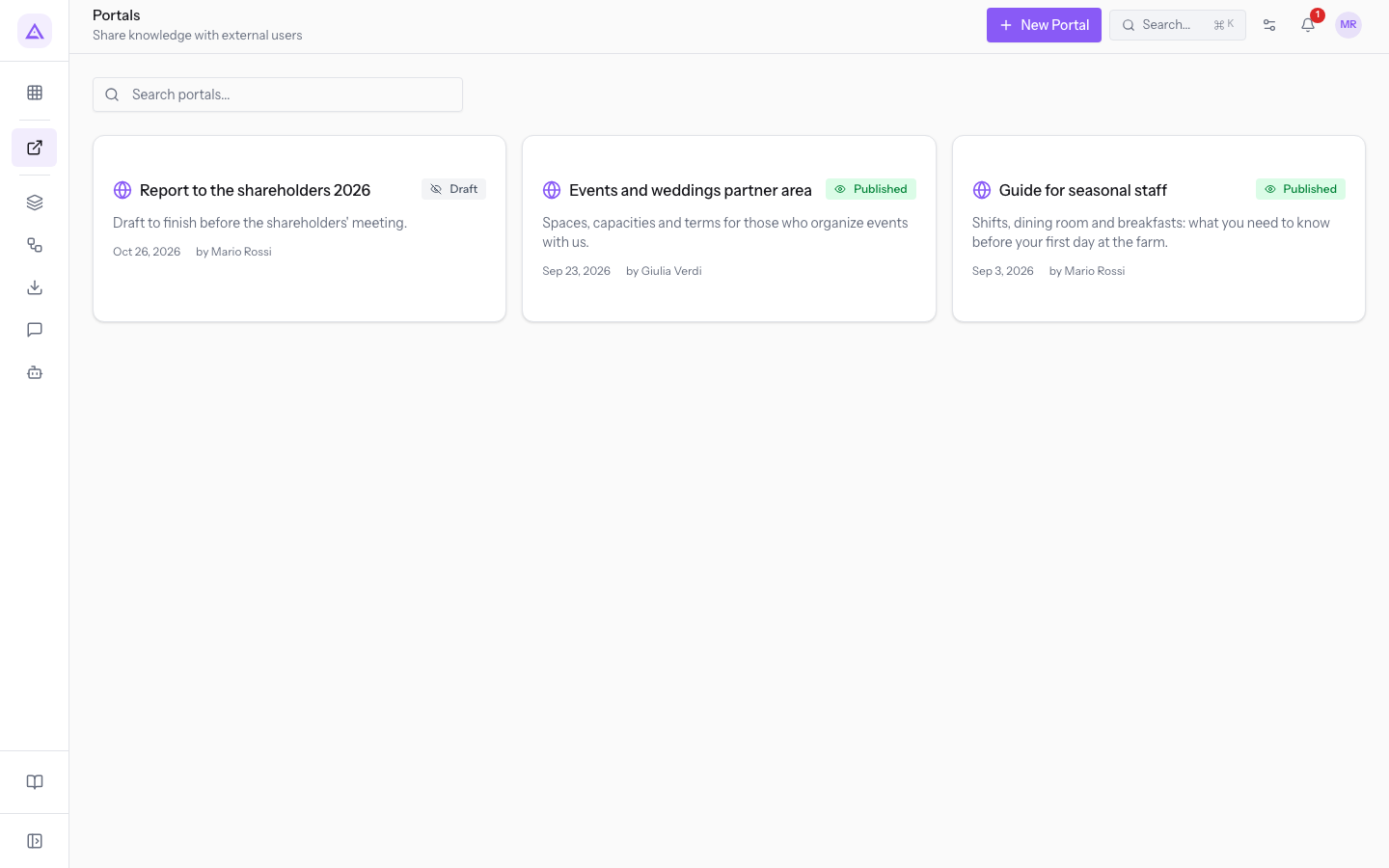
Each card shows this data:
- Name: the name of the portal.
- Status: the badge shows whether the portal is open to visitors.
- Published: a visitor with a valid link can enter. The
Guide for seasonal staffandEvents and weddings partner areaportals have this badge. - Draft: the link screen says that the portal is not available. The
Report to the shareholders 2026portal has this badge.
- Published: a visitor with a valid link can enter. The
- Description: the text that explains what the portal contains. It appears only if the portal has one, and the card shows at most two lines of it.
- Creation date: the day the portal was created.
- Author: the person who created the portal, shown after by. If the author is not recorded, the card does not show it.
Searching for a portal
Search narrows the list to portals whose name or description contains the text you type. The list updates as you type in the Search portals... field, without pressing Enter.
The field also matches part of a name: with Guide the result includes Guide for seasonal staff.
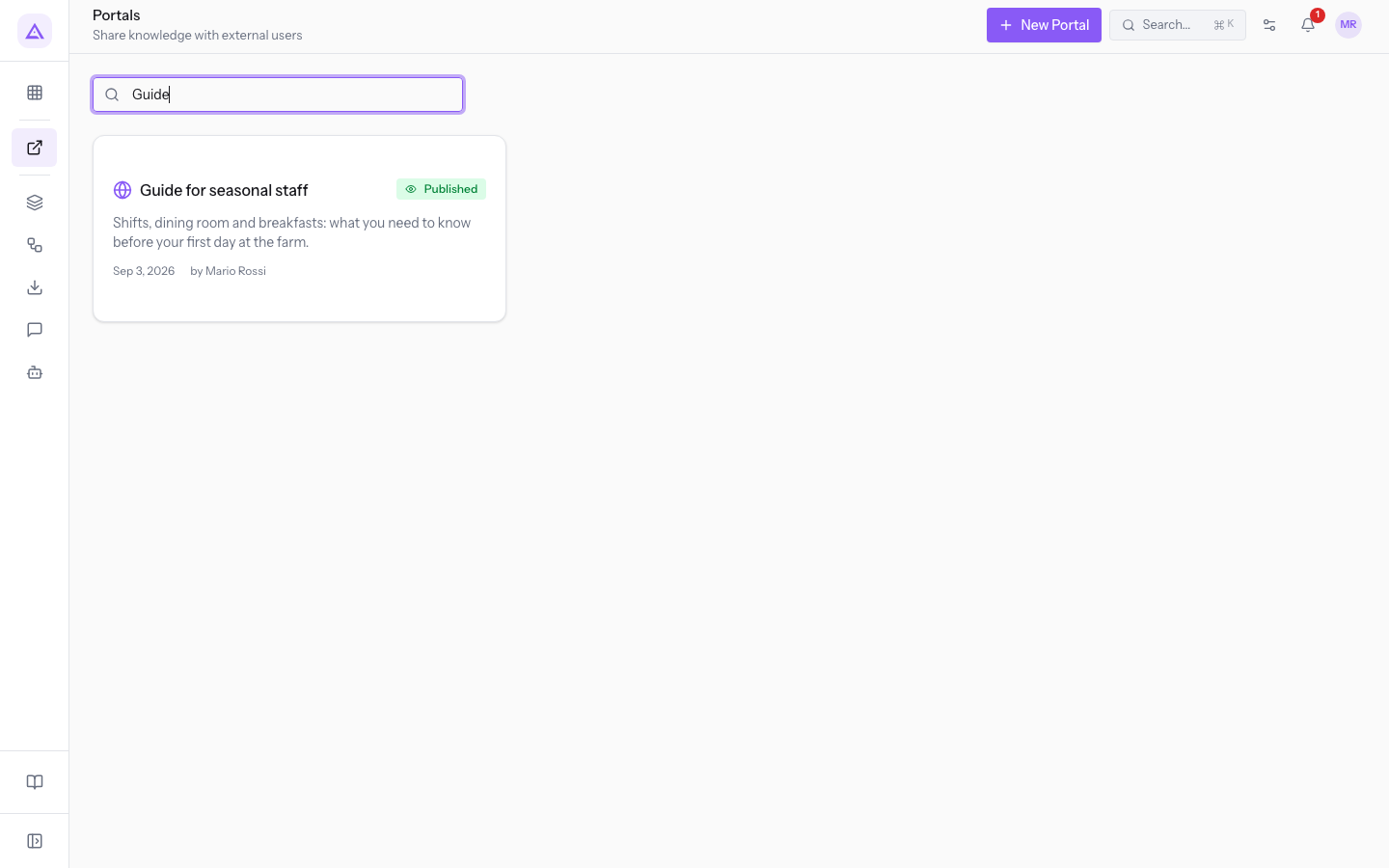
Important: search is case sensitive.
Guidefinds the portal,guidedoes not. Type the text exactly as it appears in the name or description.
If no portal matches the text, the screen shows No portals yet and the Create your first portal button, as in an organization with no portals. The message only means the text matched nothing: existing portals are not affected.
Opening a portal
Press the portal's card to open its editor, where you work on the content. The editor shows the portal's name, description and status, the Invitations and Analytics buttons, and the Content panel.
See it on your company, not on a slide deck.
In 30 minutes we map the software you use today.We show you how much work and how much margin Archimedes gives back.
Show me on my business →What industry are you in?
One tap — it lets us prepare the demo around your world.
What tools do you use today?
Pick the ones you recognise — or just type them. It helps us show you how they migrate.
Last step: your details.
We reply within one working day — and right after, if you like, you pick the demo slot yourself.
We couldn't send your request. Try again, or write to us at [email protected].
By sending, you agree to your data being processed so we can get back to you about the demo. Privacy notice.
Preview form — nothing is sent from this page.
Want to schedule the demo now?
Your call: book the slot you prefer yourself, or we'll call you to arrange it.
Live availability, 30 minutes, instant confirmation. The calendar opens in a new tab.
Lock in your slot ↗We'll get back to you within one working day — and we'll join the call already knowing your world.
The calendar is open in another tab: pick a slot and the demo is booked. Can't see it? Reopen it ↗
Preview page: nothing was sent.
Our calendar is live: take the slot that suits you and the demo is booked. 30 minutes, instant confirmation, no waiting.
Lock in your slot ↗